How to Improve Domain Rating (DR) and Remove Toxic Backlinks in 2026
Published: 14 June 2026 · Updated: 14 June 2026
Quick answer: To improve your Domain Rating (DR) in Ahrefs, you need to earn backlinks from high-DR websites that have few outbound links. Simultaneously, removing toxic backlinks protects your DR from being dragged down. This guide covers both — step by step.
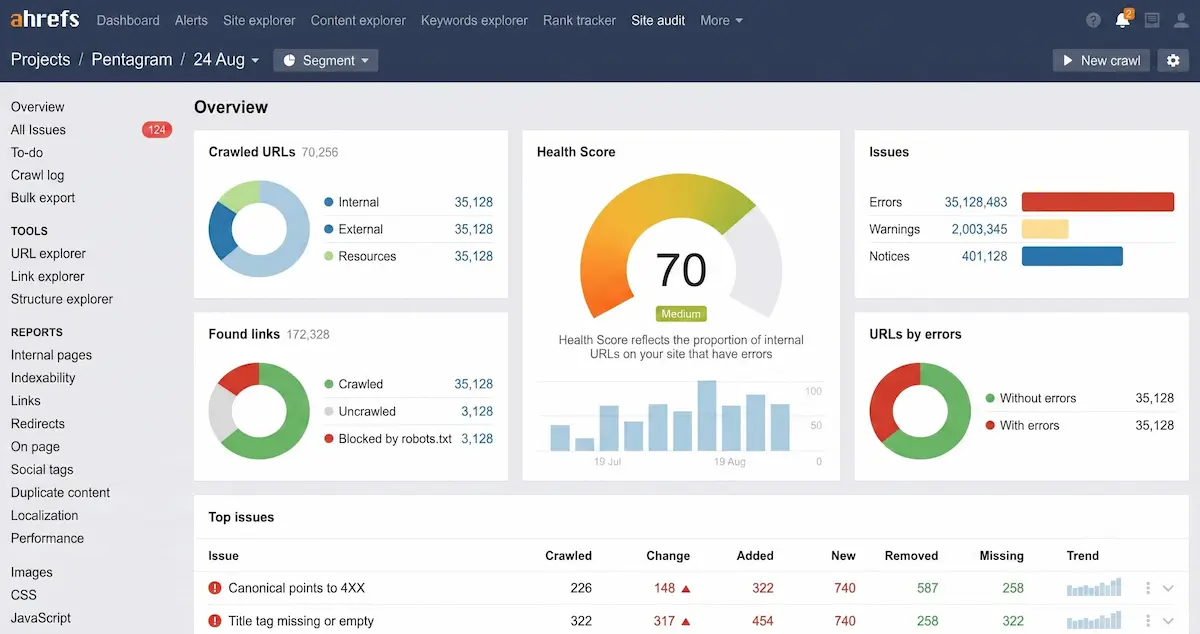
A Domain Rating growth trend in Ahrefs — the goal of every link building campaign.
1. What Is Domain Rating (DR) and Why Does It Matter?
Domain Rating (DR) is a metric created by Ahrefs that measures the overall strength of a website's backlink profile on a logarithmic scale of 0 to 100. The higher your DR, the more authoritative your domain appears — and the easier it becomes to rank new content in Google search results.
DR is different from Moz's Domain Authority (DA) or Semrush's Authority Score, although all three attempt to measure a similar concept: how trustworthy is this domain based on who links to it?
Here's what makes DR unique:
- It focuses almost exclusively on backlinks — specifically, the quality and uniqueness of sites linking to you
- It is logarithmic — going from DR 10 to DR 20 is far easier than going from DR 60 to DR 70
- It is relative — a DR 30 site can comfortably dominate a niche where competitors sit at DR 15–25
Why does DR matter for your rankings?
In our experience running link building campaigns at BacklinkBridge, we consistently see that pages on higher-DR domains rank faster, hold rankings longer, and recover more quickly after Google algorithm updates. DR is not a Google ranking signal directly — but the backlinks that build your DR are exactly what Google uses to evaluate your authority.
📌 Key stat: According to Ahrefs' own research, 90.63% of pages get zero organic traffic from Google. The pages that do rank almost always have a meaningful backlink profile behind them.
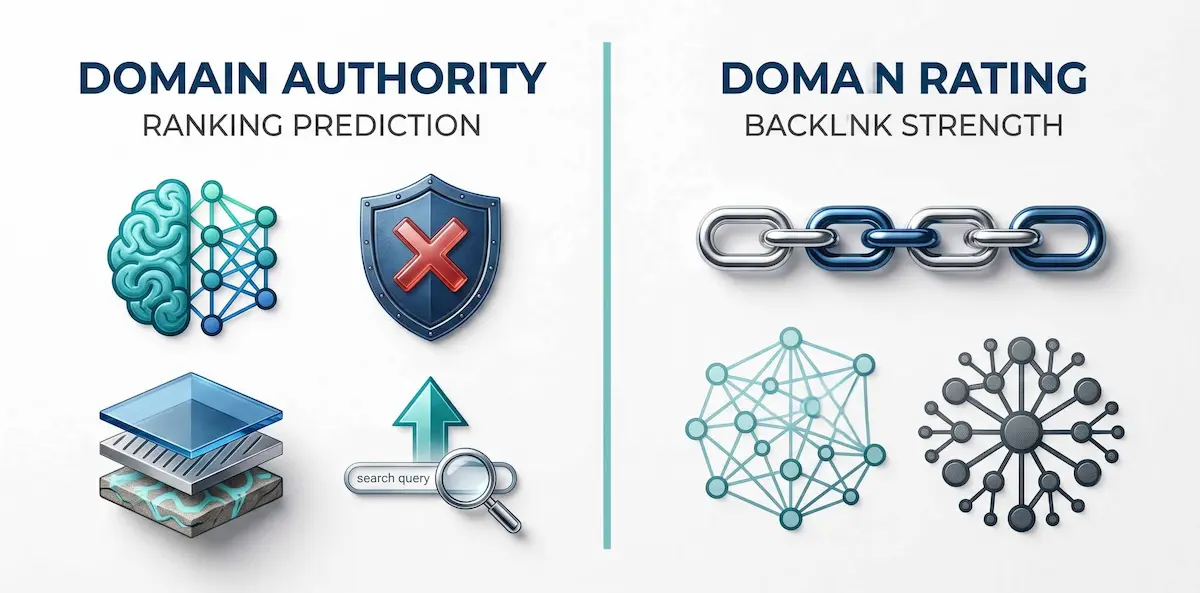
Higher DR domains consistently hold stronger average positions across keyword portfolios.
2. What Is a Good DR Score in 2026?
There is no single "good" DR — it depends entirely on your niche and your competition.
| DR Range | What It Means | Typical Site Type |
|---|---|---|
| 0–20 | New or low-authority site | Just launched, minimal backlinks |
| 20–40 | Growing authority | Active blogger, small business with some links |
| 40–60 | Established authority | Mid-size companies, niche publications |
| 60–80 | High authority | Industry leaders, established media |
| 80–100 | Elite authority | Wikipedia, Forbes, Ahrefs, major news outlets |
The practical target: If your top 5 competitors have an average DR of 35, getting your DR to 30–40 puts you in a competitive position for their keyword targets — without needing to match the giants.
At BacklinkBridge, we use competitor DR benchmarking as the very first step in every client campaign. There is no point chasing DR 70 if you only need DR 35 to dominate your niche.
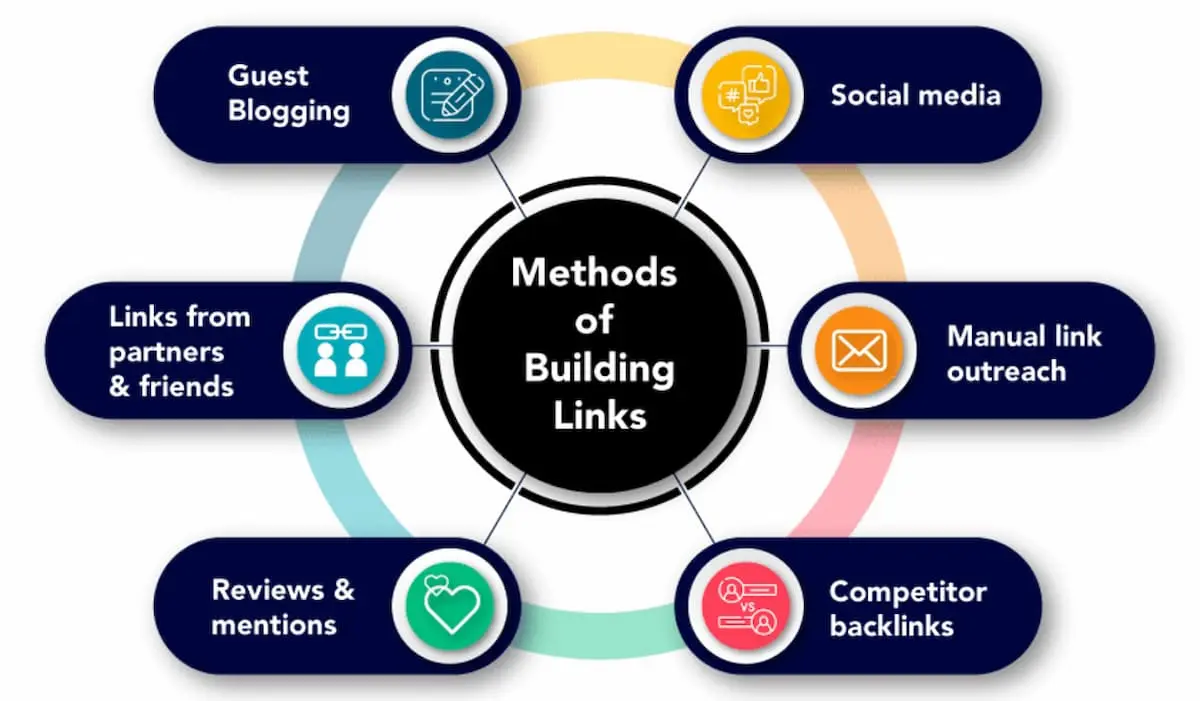
3. The 6 Fastest Ways to Improve Your DR
These are the methods that have consistently moved the needle for our clients — ranked by speed of impact.
Method 1: Guest Posting on Relevant, High-DR Sites
Guest posting remains the most reliable white-hat method for building high-quality backlinks quickly. The key word is relevant — a backlink from a DR 50 website in your niche is worth ten times more than a link from an unrelated DR 50 site.
How to do it right:
- Identify 20–30 websites in your niche that publish guest content (search:
your topic + "write for us") - Pitch a genuinely useful article — not a thinly veiled ad for your services
- Ensure the link appears within the body of the article with natural anchor text
- Target sites with DR 30+ and real organic traffic — verify with Ahrefs Site Explorer
💡 From our campaigns: Guest posts on DR 40–60 sites in the same niche routinely move a client's DR by 3–8 points within 60–90 days — if at least 5–10 quality placements go live.
This is exactly the service BacklinkBridge specialises in — if you want someone to handle the outreach, pitching, and placement, explore our guest posting service.
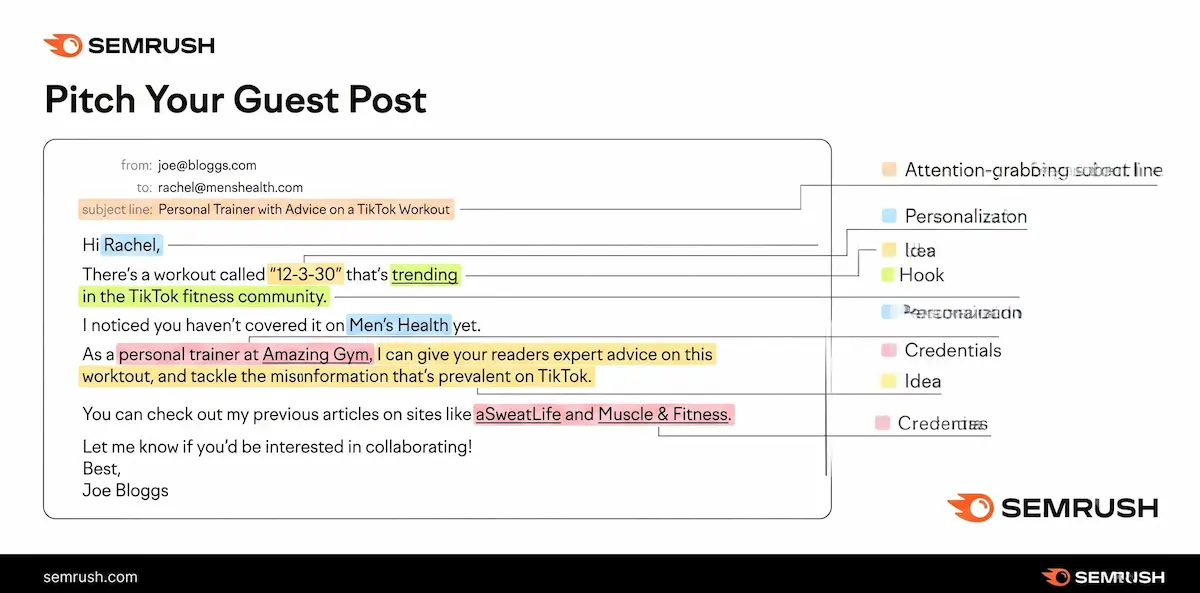
The structure of a high-converting guest post outreach email — subject line, personalisation, and value pitch.
Method 2: Fix and Reclaim Lost Backlinks (Broken Link Reclamation)
This is one of the fastest ways to recover DR you have already "earned" but lost due to deleted pages, URL changes, or site redesigns.
How to audit lost links:
- In Ahrefs, go to Site Explorer → Backlinks → Broken
- Filter for links from DR 20+ sites
- For each broken link: restore the page, set a 301 redirect, or contact the linking site
A single 30-minute audit often uncovers 5–15 recoverable high-quality links. This is free DR improvement — no outreach required.
Method 3: Build Links from Unique Referring Domains
DR is heavily influenced by the number of unique root domains linking to your site. Getting 100 links from the same website barely moves your DR. Getting links from 10 different DR 30+ websites has a significant impact.
Priority order for new referring domains:
- Niche directories — curated, editor-reviewed industry directories
- Resource pages — search
your keyword + "useful resources" - Podcast guest appearances — show notes almost always include a backlink
- Industry associations — membership often includes a directory listing
- HARO / Connectively — earn editorial backlinks from high-DR media sites
Method 4: Create Link-Worthy Content (Linkable Assets)
Formats that earn the most backlinks organically:
- Original data studies — survey your audience, publish key stats
- Ultimate guides — long-form (3,000+ word) comprehensive resources
- Free tools — even a simple calculator earns ongoing links
- Infographics — visual data that bloggers embed with a credit link
- Industry statistics pages — other writers link to these constantly
🎯 BacklinkBridge tip: Before writing a long-form guide, search your target keyword in Ahrefs Content Explorer and check how many backlinks the top-ranking pieces have earned. 50–200 backlinks = strong link-earning potential.
Method 5: Internal Linking to Distribute Link Equity
Every external backlink passes authority into your domain. But where that authority flows internally is determined by your internal linking structure. Fix this by:
- Identifying your highest-DR pages (Ahrefs → Best by Links)
- Adding internal links from those pages to your target service pages using keyword-rich anchor text
- Ensuring your homepage links to key content pillars
Method 6: Remove Toxic Links That Are Dragging Your DR Down
This is the most overlooked DR improvement strategy. If your backlink profile contains spam, PBN links, or irrelevant foreign-language sites, these actively suppress your DR and risk triggering Google penalties. We cover this in full detail in the next section.
4. How to Identify and Remove Toxic Backlinks
Toxic backlinks are links from websites that violate Google's guidelines or signal manipulative intent. In our audit work at BacklinkBridge, we find that over 30% of clients who come to us for DR improvement have a meaningful proportion of toxic links dragging them down.
Signs of a toxic backlink:
- The linking site has a DR of 0–5 with no organic traffic
- The site is in a completely unrelated niche or language
- The anchor text is over-optimised (exact-match keywords stuffed unnaturally)
- The page linking to you has hundreds of outbound links to unrelated sites
- The domain was previously penalised, hacked, or is a known PBN
Step-by-Step Toxic Backlink Audit (Using Semrush)
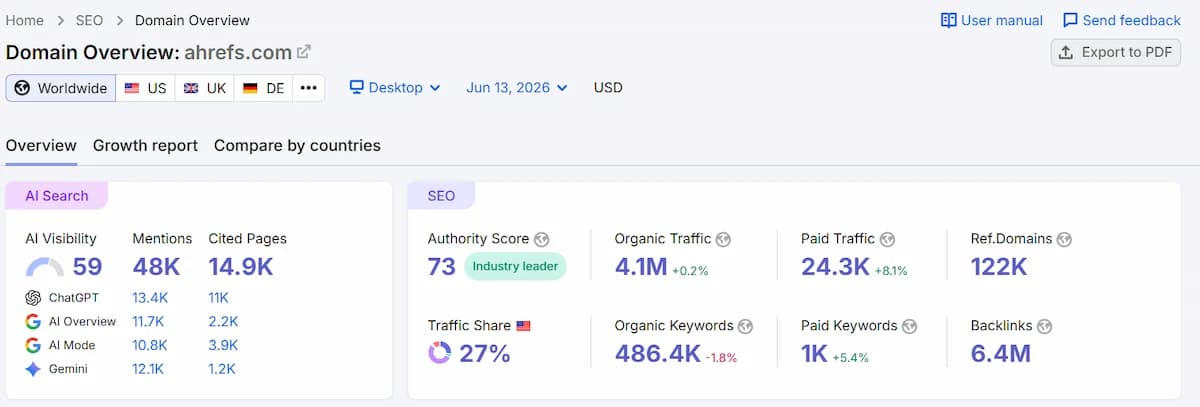
The Semrush Backlink Audit tool categorises links as Toxic, Potentially Harmful, and Safe — each colour-coded for fast triage.
- 1Go to Semrush Backlink Audit and connect your Google Search Console.
- 2Navigate to the Audit tab. Semrush scores each backlink 0–100 for toxicity. Focus on anything scoring 45+.
- 3For each suspicious link, check: Is it a real business or spam farm? Are there hundreds of outbound links to unrelated sites? Is the anchor text unnaturally exact-match?
- 4Sort links into: Remove (contact webmaster), Disavow (no response/contact info), Keep (legitimate but suspicious).
- 5Submit your disavow file to Google's Disavow Tool via Search Console. Use domain-level format:
domain:spamsite.com - 6Re-audit every 3 months. Competitors sometimes build toxic links to your site deliberately.
⚠️ Important: Do not disavow aggressively. Disavowing legitimate links is worse than leaving toxic ones. If in doubt, leave the link and only disavow clear spam. Need professional help? BacklinkBridge offers a full toxic link removal service.
Step-by-Step Using Ahrefs
- Open Site Explorer and go to Backlinks
- Filter: DR 0–5, No organic traffic, Dofollow
- Review each result — look for link farms, foreign spam, and PBN footprints
- Export and add genuine spam to your disavow file
5. Link Building Strategies That Work for Small Businesses
Most link building guides are written for enterprise brands with large budgets. If you are a small business or a new website starting from DR 0–25, the playbook looks different. Here is what actually works:
Strategy 1: Local and Niche Directories
Unlike generic directories, niche-specific and location-specific directories carry real authority:
- Industry association directories (digital marketing associations, local chamber of commerce)
- Location-based directories (True Local, Yellow Pages AU, Google Business Profile)
- Niche tool directories (ProductHunt for SaaS, Clutch.co for agencies)
Strategy 2: Podcast Guest Appearances
Every podcast episode generates a show notes page — and almost every show notes page includes a link to the guest's website. A 30-minute interview earns a permanent dofollow backlink, often from DR 20–50 domains. Search: your niche + podcast + "guest" or use Podmatch / PodcastGuests.com.
Strategy 3: Link Exchange (Done Correctly)
Direct exchanges violate Google's guidelines. But indirect, three-way exchanges — where Site A links to Site C, Site C links to Site B, and Site B links to Site A — are widely used and generally white-hat when editorially placed and topically relevant.
Strategy 4: Content Syndication with Canonical Attribution
Republish your best posts on Medium, LinkedIn Articles, or industry publications with a canonical tag pointing back to your original. This expands reach without duplicate content penalties.
Effort vs. DR impact across common link building strategies for small and new websites.
6. How Long Does It Take to Improve Domain Rating?
The honest answer is: it depends on your starting point and link velocity. Here is a realistic timeline based on campaigns we have run:
| Starting DR | Target DR | Links/Month Needed | Realistic Timeline |
|---|---|---|---|
| 0–5 | 15–20 | 5–8 quality links | 3–6 months |
| 10–20 | 25–35 | 8–15 quality links | 4–8 months |
| 20–35 | 40–50 | 15–25 quality links | 6–12 months |
| 35–50 | 55–65 | 20–40 quality links | 9–18 months |
📊 From our data: Clients who combine guest posting (8–12 links/month) with a toxic link cleanup see DR improvements of 5–15 points within the first 90 days — significantly faster than link building alone.
Frequently Asked Questions
What is the difference between DR (Domain Rating) and DA (Domain Authority)?
DR (Domain Rating) is created by Ahrefs and measures the strength of a domain's backlink profile. DA (Domain Authority) is created by Moz and incorporates a broader range of signals. Neither is used directly by Google — they are third-party estimates of ranking power.
Can toxic backlinks really lower my Domain Rating?
Yes. Toxic backlinks suppress DR in two ways: (1) they signal to Ahrefs' algorithm that your profile contains low-quality links, and (2) they risk triggering Google algorithmic penalties that cause ranking drops.
How many backlinks do I need to reach DR 30?
There is no fixed number — it depends on quality. In practice, 50–100 backlinks from genuinely diverse, DR 30+ websites will typically push a new domain to DR 25–35. Ten links from DR 70 sites could achieve the same result faster.
Is it safe to buy backlinks?
Paid backlinks that are not editorially earned violate Google's link spam policies. However, legitimate paid placements — such as paying for a guest post slot on a curated editorial site with real traffic — are widely used and generally low-risk when done correctly.
How do I check my current Domain Rating for free?
Go to Ahrefs' free DR checker (ahrefs.com/website-authority-checker), enter your domain, and you will see your current DR alongside top linking domains.
Does removing toxic backlinks improve rankings immediately?
Not immediately — Google processes disavow files during its regular crawl cycle, which can take 4–12 weeks. Sites with a history of manual penalties typically see ranking recovery within 2–3 months of disavow submission.
Can BacklinkBridge help with DR improvement and toxic link removal?
Yes. BacklinkBridge specialises in off-page SEO services including guest post outreach, DR improvement campaigns, and full toxic backlink audits and removal. Get in touch for a free backlink profile review.
DR Improvement Is a Marathon, Not a Sprint
Improving your Domain Rating is one of the highest-leverage things you can do for your long-term SEO — but only when paired with the right link quality, a clean backlink profile, and a consistent monthly cadence. That's what BacklinkBridge exists for.
BacklinkBridge is a white-hat SEO and link building agency. We do not sell spam links, PBN links, or any service that violates Google's Webmaster Guidelines.

Written by
Muhammad Subhan
Founder, Backlink Bridge · SEO Consultant · 5+ Years Off-Page SEO
Muhammad Subhan is the founder of Backlink Bridge and an SEO consultant with 5+ years of hands-on experience in off-page SEO and link building. He specialises in manual blogger outreach, guest posting strategy, and building high-authority backlink profiles that improve Domain Rating (DR), Domain Authority (DA), and organic search visibility. His work spans 25+ industries including finance, technology, health, real estate, and e-commerce — helping websites reduce spam score, recover from Google penalties, and achieve sustainable organic traffic growth through white-hat, editorial-grade link placements.